


YntraDose® delivers a high absorbed dose directly within the tumor while minimizing irradiation of surrounding tissues — an immediate, localized effect confirmed by imaging (PET/CT).
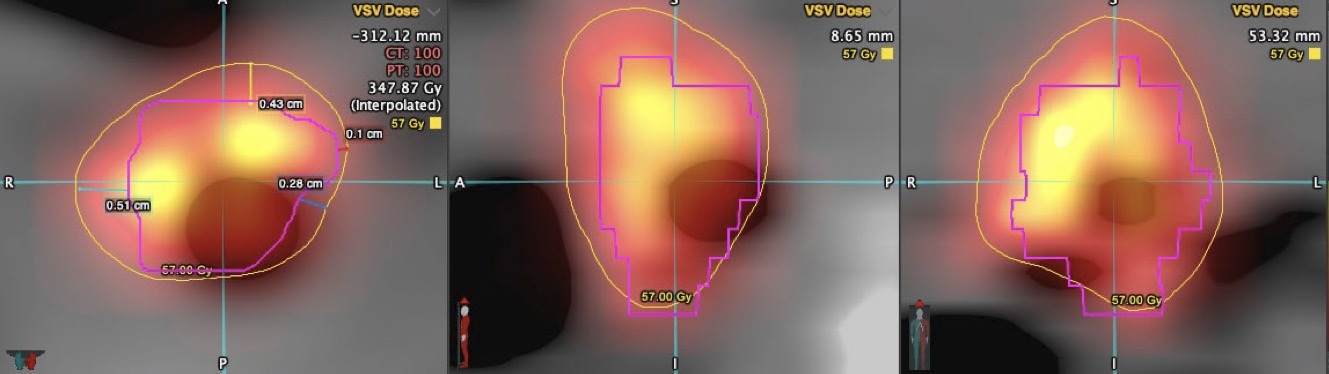
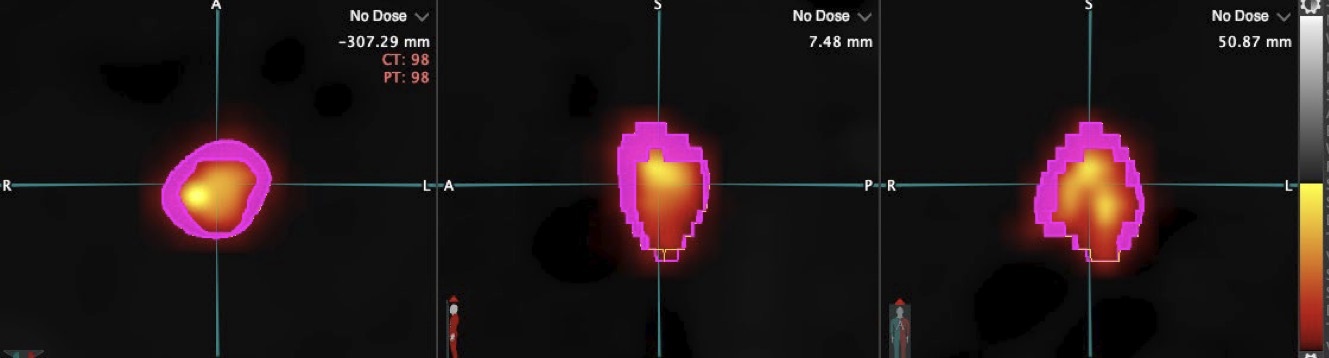
Figures from a GLP safety study conducted in an animal model (24-132-3). YntraDose® is an investigational radiotherapeutic; safety and performance are being evaluated in clinical development and have not been established.
Mechanism of action
Uniquely positioned for the KRAS era
Targeted, localized injection of Yttrium-90 microspheres in a polymerized matrix (the “glue”) — percutaneous, focal and leakage-proof. YntraDose® is designed to address the specific challenges of pancreatic cancer.
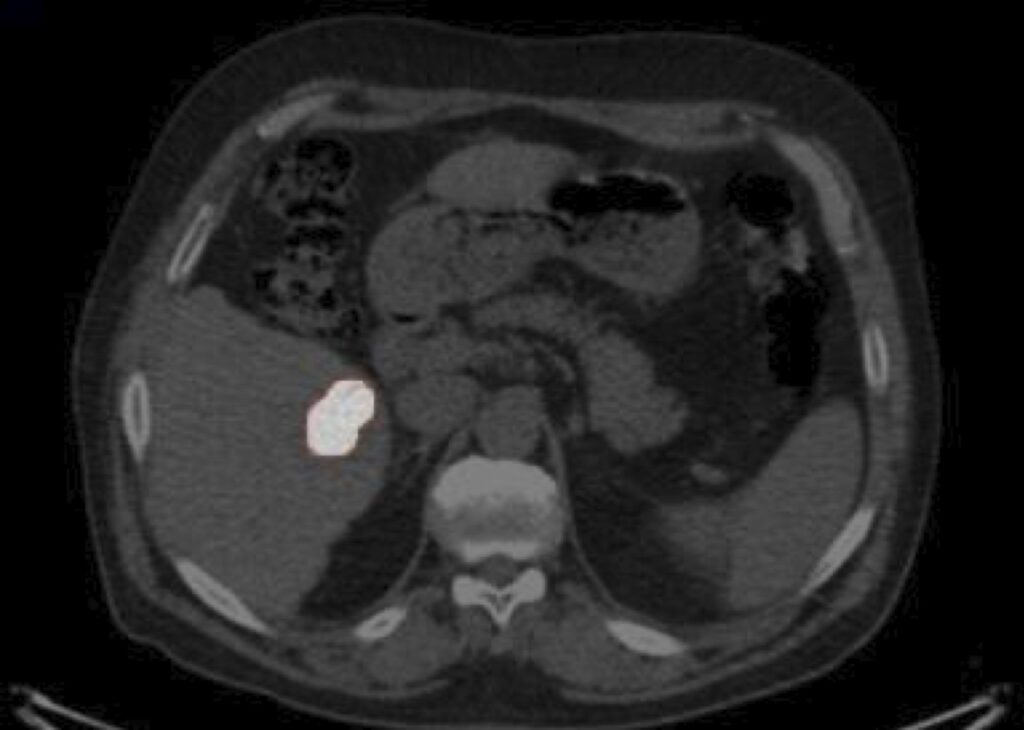
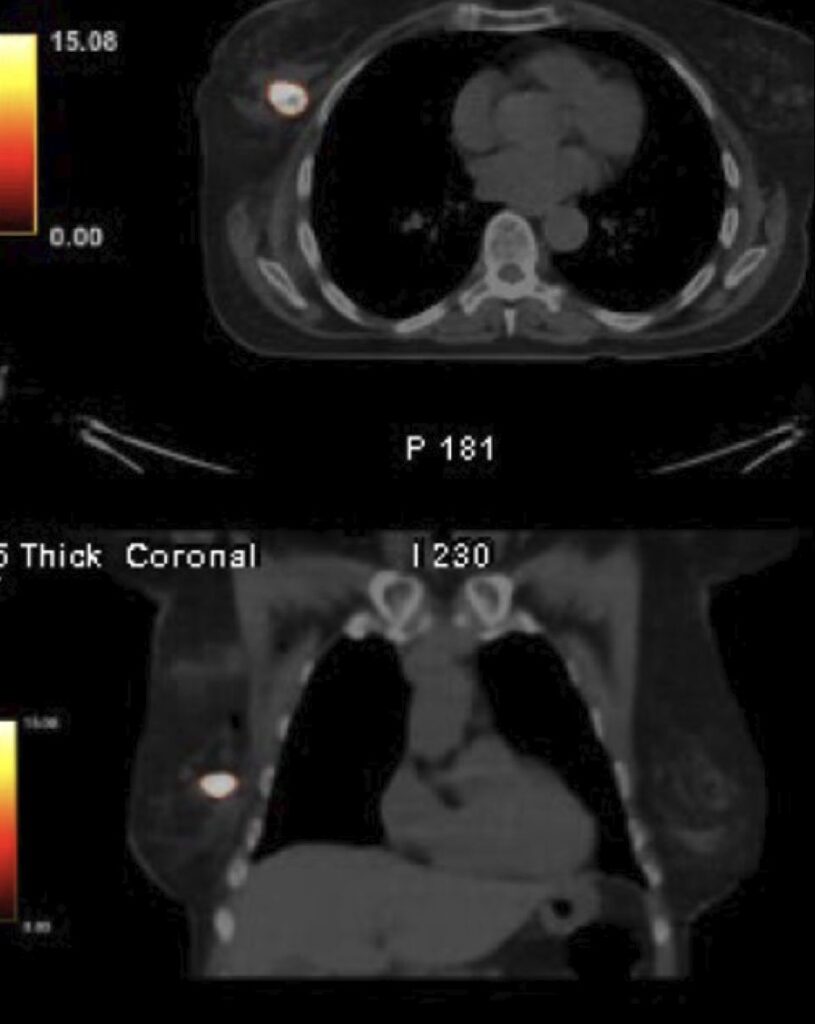
Images from first-in-human studies. YntraDose® is an investigational radiotherapeutic; safety and performance are being evaluated in clinical development and have not been established.
- Contorted arterial supply Arterial catheter placement difficulty Percutaneous; focal — no arterial catheter
- Disorganised neo-angiogenesis & uncontrolled fibroblast proliferation Intra-arterial catheter administration difficulty Percutaneous; focal delivery
- High intra-tumoral pressure: collapsed vasculature Difficult TARE and limited effectiveness of systemic drug therapy; hypoxia Rapid glue polymerisation; leakage-proof; 8–30% v/v ratio
- High intra-tumoral pressure: hypoxia Relatively high radiation doses needed; limited SBRT effect High-energy, high-dose radiation (≈100 Gy at implant edge)
- Aggressive disease progression Maintain durable local tumor control while systemic therapies control micrometastatic disease First-line add-on to best systemic therapies; fast-acting isotope
- Body movement Off-target radiation using SBRT Percutaneous; focal — reduced off-target radiation
- Receptor heterogeneity Limited drug effectiveness; drug resistance Physical radiotherapeutic mechanism — no receptor dependency
- Comorbidities Need for a minimally invasive approach Minimally invasive; percutaneous; no general anaesthesia